

1.877.754.2004 Request A Quote
Google Play Ap Store
Apple AP Store

RMC Canada

Mortgage Broker Ontario

  • Services
  • Rates
  • Home Purchasing
  • Refinance
  • U.S. Mortgages
  • Calculator
  • Apply
  • Blog
  • About
  • Contact
You are here: Home / Archives for Blog

Get the Scoop on Purchasing a Rental Property

August 10, 2021 By Administrator

Get the Scoop on Purchasing a Rental Property

You might be surprised to learn that you don't need to be one of the uber rich or make six figures to have a second property. You just need to have knowledge, determination and financial planning!

If you are purchasing a secondary property with the intention to rent, here are a few extra things to know:

  1. The minimum down payment required is 20% of the purchase price, and the funds must come from your own savings; you cannot use a gift from someone else.
  2. Only a portion of the rental income can be used for qualifying and determining how much you can afford to borrow. Some lenders will only allow you to use 50% of the income added to yours, while other lenders may allow up to 80% of the rental income while subtracting your expenses. This can have a much higher impact on how much you can afford.
  3. Interest rates typically have a premium on them when the mortgage is for a rental property versus a mortgage for a home someone intends on living in. The premium can be anywhere from 0.10% to 0.20% on a regular 5-year fixed rate.
  4. If you do eventually want to sell this property, do note that it will be subject to capital gains tax. Your accountant will be able to help you with that aspect if you do decide to sell in the future.

Planning Ahead

Prior to taking on a secondary property, you will need to have some items in order such as your down payment. In addition to the down payment, you will also need to pass the stress-test and prove that you can financially carry your existing mortgage and the new application. 

If you are looking to purchase a rental property, give me a call before you start. I would love to help review your financial situation, current mortgage and equity, and help you make a plan. The keys to success are right around the corner with a little bit of expert advice!


Alternative Financing and What You Should Know

When conventional lenders (such as banks or credit unions) deny mortgage financing, it can be easy to feel discouraged. However, it is important to remember that there is always an alternative!

If you’re seeking a mortgage, but your credit score is damaged. You'll find the big institutions won’t lend the money, you’ll find yourself in what’s commonly referred to in the industry as the “Alternative-A” or “B” lending space. 

Much like the A Lender space (big banks, credit unions, etc.), there are various companies which operate in the B lending space. Alternative lenders cater to individuals who lack a strong credit history, or a guaranteed income (recent immigrants, or the self employed, for instance). As a result, these lenders generally have lower entry qualifications, which are offset by higher interest rates. 

Why is alternative lending necessary? 

  • CRA arrears
  • Income issues such as non-traditional income as with self-employed borrowers
  • Credit issues such as low credit score, credit arrears, current mortgage or even bankruptcies
  • Unexpected liens on title
  • Foreclosure situations
  • Unique financing needs/opportunities

Beyond B-lenders are another alternative, which are known as Private or Unregulated lenders. These could just be individuals with money who are looking to invest. They are not regulated by any agency, and their rates and fees could be quite high. 

These lenders are not required to stress test mortgage applicants, but many will abide by lower qualification rates. As a result, getting approved for a loan through an alternative or uninsured lender can be much easier than going through a traditional bank or credit union. Again, it is vital to pay close attention to the deal an unregulated lender offers. Lower qualification rates tend to come with baggage in the form of high interest rates or penalties.

Considerations for Alternative Mortgages Due to the “B” Lender space, it is important to take a good look at the conditions for these mortgage products to ensure that you won’t get trapped with rates you can’t afford. 

Before considering an alternative mortgage, there are a few things you should ask yourself

  1. What issue is keeping me from qualifying for a mortgage today?
  2. How long will it take me to correct this issue and qualify for a mortgage?
  3. How much do I currently have available as a down payment?
  4. Am I willing to wait until I can qualify for a regular mortgage, or do I want/need to get into a certain home today?

Are you someone who is ready to go ahead with an alternative mortgage due to a bruised credit score? Or you don’t want to wait until you’re able to qualify with a traditional lender? Here are five questions you should ask when reviewing any alternative mortgage product:

  1. How high is the interest rate?
  2. What is the penalty for missed mortgage payments? How are they calculated? What is the cost to get out of the mortgage altogether?
  3. Is there a prepayment privilege? For example, are you able to avoid penalties if you give the lender a higher mortgage payment once a month?
  4. What is the cost of each monthly mortgage payment?
  5. What does it look like when it comes to renewal?

When it comes to the alternative lending space, things can get a bit murky. If you are struggling to obtain an A-Lender mortgage, I would be happy to discuss your options with you and help you source an alternative.


8 Steps to the Perfect Summer Social!

There’s something magical about summer and no matter where you live in Canada, backyard BBQ season is the perfect opportunity to spend a little time with family and friends. Nothing says party vibes more than food on the grill and summer drinks flowing. Whether you live in a country house, a suburban townhome or a city condo, gather your crew and these few essentials:

Good Eats 

To have the most success with your backyard party, you must pre-plan! Take a few hours the night before and meal prep. This includes planning an easy menu with bite size snacks, easy salads and flavour packed options to keep your guests satisfied. And don’t forget to make sure the barbecue has plenty of propane!

Cold Drinks 

Depending on your guests, you can either have a cooler full of pop and water. If it is a more adult affair, add a little alcohol to the mix! Boozy lemonades or spiked ice teas are pretty easy to make and very fun to drink. Craft beer, ciders or chilled white wine are other fun options for a hot day! 

Did Someone Say Dessert? 

If you’re planning an all-day affair, you might want to keep some quick and easy desserts or snacks on hand for the evening. Homemade ice cream bars, fruit kabobs or a veggie platter, or even a couple bags of kettle chips can make great options for any peckish guests. And as the sun sets, you can break out the marshmallows and get your S’mores on in front of the fire!

Decor & Ambiance 

For suburban hosts, your backyard party would include a sitting area, maybe umbrellas to offer some shady spots and some water fun! But, if you find yourself in smaller city digs, that doesn’t mean your party still can’t be one for the ages. Consider throw pillows, paper patio lanterns and plastic glassware which are all affordable and easy to find to help create that perfect party space! 

Choosing Your Tunes 

While music can set the ambiance, you need to know your guests. It’s not easy to pick a playlist that will appease all ears, but streaming services like Spotify and Apple iTunes have plenty of mixed playlists that should do the trick.

Entertainment 

Backyard games such as a bocce ball set, Frisbee and even a football can keep the fun and competition going for hours! If you’re looking for a more chill hang, consider setting up a card table or some board games for those who want to partake. 

For the Kids

If your party involves kids, you’ll want to keep the food simple and easy to eat with hands, so burgers, hot dogs, chips and some watermelon are the way to go. You’ll also want to keep them occupied with simple games or more active options such as a soccer ball, mini trampoline or a sprinkler to run through and keep them cool. When daylight starts to fade, you can set up a backyard movie or camp-out with some tents to settle the night down. It never hurts to tire the young ones out so the grownups can have some chill time for themselves!  

Other Considerations 

Depending on the temperature and time of day for your party, you might want to remind guests to bring sunscreen, hats and/or bug spray to make sure their visit is as comfortable as possible!


Changes to the Stress Test

July 7, 2021 By Administrator

Changes to the Stress Test and What You Need to Know

As you may have heard, the Bank of Canada recently changed the stress test rules as of June 1, 2021. With these changes, now both insured and uninsured mortgage borrowers will be subject to a stricter stress test when qualifying for their mortgage.

The new qualifying rate on uninsured mortgages – where the down payment is 20% or more – is now the contracted rate plus two percentage points or 5.25%, whichever is higher.

This means that any buyer whose down payment on a home is one-fifth of the purchase price or higher must show they can afford the mortgage payments if the interest rate was two percentage points higher than what the bank is offering, or the new five-year benchmark rate per the Bank of Canada.

How much does it reduce your buying power?

Overall, the implementation of these tougher stress test rules will reduce buying power by roughly 4-5% for borrowers. To help illustrate  how this change affects you, consider the following scenario with $100,000 gross income:

The previous stress test at 4.79% would give this individual the ability to borrow $469,530 (based on good credit score with max GDS/TDS qualifications at 39/44%). Now, with the current scenario of 5.25% stress test rate, the they can now only borrow $448,880 (based on good credit score with max GDS/TDS at 39/44%). This is a difference of $20,650 which reduces your home options.

To ensure you are searching in the right price range and budgeting accordingly, it is important to consider this stress test change. If you are looking to purchase your first home or move, please don’t hesitate to contact me today for a better understanding of the rules and what you qualify for.

Avoid These First-Time Homebuyer Mistakes

As a first-time buyer, I am here to give you some tips on homebuyer mistakes to be on the lookout for so you can avoid them for the best experience possible!


Thinking You Don’t Need a Real Estate Agent

You might be able to find a house on your own, but there are still many aspects of buying real estate that can confuse a first-time buyer. Rely on your agent to negotiate offers, inspections, financing and other details. The money you would have saved on commission can be quickly gobbled up by a botched offer or overlooked repairs.

Going With The First Real Estate Agent You Find

As much as not having a real estate agent can be a disadvantage, having the wrong one can also make the process more difficult. You don’t want to get halfway into house-hunting before realizing your real estate agent is wrong for you. Ideally, you want to source an agent from a friend or family referral. However, if you are stuck or looking for more options, I would also be happy to provide some referrals as your mortgage professional.

Getting Your Heart Set on a Home Without Doing Your Homework

The house that’s love at first sight may not always be what it seems, so it is important to keep an open mind. If you jump in too fast you may be too quick to go over budget or you might overlook a potential pitfall. Taking the time for proper inspections, budget comparisons and long-term family planning can go a long way in ensuring your first home is the right home! 

Committing to More Than You Can Afford

This is one of the most common mistakes that first-time homebuyers can run into, but to ensure your future financial security it is imperative to truly consider your budget. You don’t want to sacrifice retirement savings, an emergency fund or potential holiday for mortgage payments. You need to stay nimble to life’s changes and overextending yourself could put your investments—including your house—on the line.

Fixating on the Lowest Interest Rate

A reasonable interest rate is important, but not at the expense of heavy restrictions and penalties. Make a solid long-term plan to pay off your mortgage and then find one that’s flexible enough to accommodate life changes, both planned and unexpected. I would be happy to discuss all of your mortgage options with you to ensure that you get the best overall mortgage product with an affordable rate that suits YOU!

Choosing a Fixer-Upper Simply for the Cheaper Listing Price

That old character home may have loads of potential, but it is vital to be extra diligent during the inspection period. What will it really cost to get your home to where it needs to be? Negotiating a long due-diligence period will give you time to get estimates from contractors in case you need to back out. 

Diving Into Renovations as Soon as You Buy

Whether or not you choose a fixer-upper or simply want to update some things in your new home, it is important not to rush into them. While renovations may increase the value of your home, overextending your credit to get upgrades done fast doesn’t always pay off. Take time to make a solid plan and the best financial decisions. Living in your home for a while before renovating will also help you plan the best functional changes to the layout. 

Not Researching the Neighbourhood

It may be the house of your dreams, but annoying neighbours or a nearby industrial zone can be a rude awakening. Spend some time in the area before you make an offer and talk to local business owners and residents to determine the pros and cons of living there. 

Opting Out of Mortgage Insurance

Your home is your largest investment and it is imperative that you protect it. Mortgage insurance not only buys you peace of mind, it also allows for more flexible financing options. Plus, it allows you to take advantage of available equity to pay down debts or make financial investments. If you are ready to search for your first home, don’t hesitate to reach out to me today for expert advice, referrals and mortgage solutions that are right for you!

Interesting topics:

  • Improving Your Financial Direction
  • Refinance Your Mortgage
  • Home Equity Loan – Access up to 95% of the value of your home
  • Purchasing a Home

    More related readings you might like:

    • How to Calculate Mortgage Trigger Points?
    • Adapting Your Finances to Inflation
    • Housing Market Predictions?
    • Time to Check-In with your Mortgage!
    • Dreaming of Your Very Own Vacation Home
    • Winterizing Your Home
    • Make sure your holidays are stress and credit-free

Building Your Own Home?

June 2, 2021 By Administrator

Building Your Own Home? 5 Things to Consider

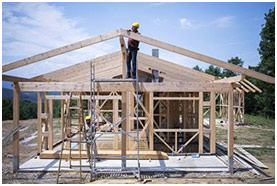
Building a house is an exciting adventure and the ultimate way to customize your home. To ensure you have the best experience, I have put together 5 important things to know before getting started.

1. It’s All in the Numbers

Whether you are shopping for a pre-built home, or are looking to create your own from the ground up, it is vital to know what you can afford and stay within it. This is the key to building a home that you will be able to enjoy for the next 20 or 30 years, while still maintaining your financial stability.

When calculating the cost of building your home, there are many components from construction materials and contracts to tax benefits, funds for the down payment and slush account and other related expenses. In Vancouver B.C., the typical cost to build a house is between $200 and $350+ per square foot. In some cases, it could cost as much as $500 or more per square foot. Overall, the average cost to build a house can range $300,000 to $350,000 for 1,000 square feet to double or triple that amount. On average, a 2,500 square foot home could cost between $500,000 and $875,000 to build depending on materials, design, etc.

2. Choose a Reputable Builder

When you start looking it can quickly become overwhelming when you realize how many options there are for builders. When it comes to determining the head contractor for your project, careful research is needed. 

Note that in British Columbia, Alberta, Ontario and Quebec, builders must provide home buyers with a third-party warranty. In the rest of Canada, the decision is left up to the individual builder. The Canadian Home Builders Association has a list of reputable professionals you can start with or, if you reside in the province of Ontario, you can use the HCRA’s Ontario Builder Directory. This will allow you to confirm:

  • A builder or vendor is licensed with the HCRA
  • Any conditions have been placed on their licence
  • If Tarion has had to resolve warranty claims for a builder in the past 10 years
  • How many homes they have built and where these homes are

It can also help to consult friends and family members who have gone through the process. I can also assist in providing references!

3. Build a Home for Tomorrow

As tempting as it can be to personalize your home to the tenth degree and include every cool little feature you can think of, it is important to always keep resale value and practicality in the back of your mind. Life can often throw a few curve balls that, for one reason or another, may result in you having to sell your home in the future. If that time should ever come, you will want to be able to appeal to all buyers easily and not have to hold the house longer than necessary. Ask yourself if  the features you are putting into your home will appeal to others, and also if the design suits the neighborhood you are building in as well.

4. Go Green!

Now, more than ever before, energy efficient upgrades are easy to add to your home. To make your home as efficient as possible, it is important to incorporate these options into your design BEFORE you start building. Options such as energy efficient appliances, windows, HVAC systems, and more can save you money in the long run and may also make you eligible for certain grants and discounts. The Canadian Mortgage and Housing Corporation (CMHC) green building program rewards those who select energy efficient and environment friendly options.

5. Understand the Loan

Aside from the costs of building a new home, what does a mortgage look like for an unbuilt home? In many cases, this is where a “construction mortgage” might come into play. In order to properly qualify for financing on an unbuilt home, you need to give me a budget that includes both hard and soft costs, as well as the reserve of money you plan to have set aside in case you run into unexpected events.

For example, based on the lender loaning up to 75% of the total cost (with 25% down):

  • Land purchase price: $200,000
  • Total soft and hard costs (as complete): $400,000
  • $600,000 x 75% = $450,000 available to finance

It is also important to understand that the lender will also consider the appraised value of the finished product. This value is determined before the project begins. In addition, depending on the lender, you may have a time frame within which you need to complete construction (typically between 6 and 12 months). 

Loan repayment

Below are a few key points to remember with regards to repayment on construction loans:

  • Construction loans are usually fully opened and can be repaid at any time.
  • Interest is charged only on amounts drawn; there are no “unused funds”
  • Once construction is complete and project completion has been verified by the lender, the construction mortgage is “moved over” to a normal mortgage

Lastly, the lender will always consider the marketability of a property. This includes not only demographic aspects, but also the geography. A lot that in a secluded area with minimal market demand may not be a property that they are willing to lend on, so it is important to review the entire property and plan before breaking ground. Please don’t hesitate to contact me to get started on the process so that you can build with confidence!

Any questions at all, please feel free to give us a call, we’re here to help!

Real Talk: Mortgage Penalties

When it comes to mortgages, it is easy to focus on the rates and your current situation, but the reality is that life happens and when it does, rates won’t be the only thing that matters.

At the end of the day, a mortgage is a contract between you (the homeowner) and the bank. As such, there are often penalties involved if the contract is ever broken. This is something that every homeowner agrees to when you sign mortgage paperwork, but it can be easy to forget - until you’re paying the price. These things do happen as approximately 6 out of 10 mortgages in Canada are broken within 3 years. Should your circumstances change, knowing the next steps can help you navigate the process.

Calculating Penalties

Typically, the penalty for breaking a mortgage is calculated in two different ways. Lenders generally use an Interest Rate Differential calculation or the sum of three months interest to determine the penalty. You will typically be assessed the greater of the two penalties, unless your contract states otherwise.

Interest Rate Differential (IRD):

Canada has no one-size-fits-all rule for how the IRD is calculated and it can vary greatly from lender to lender. This is due to the various comparison rates that are used. However, typically the IRD is based on the amount remaining on the loan and the difference between the original mortgage interest rate you signed at and the current interest rate a lender can charge today.

Ideally, you will want to be aware of what your IRD penalty would be before you decide to break your mortgage as it is not always the most viable option. 

In this case, these penalties vary greatly as they are based on the borrower's specific mortgage and the specific rates on the agreement, and in the market today. However, let's assume you have a balance of $200,000 on your mortgage, an annual interest rate of 6%, 36 months remaining in your 5-year term and the current rate is 4%. This would mean an IRD penalty of $12,000 if you break the contract.

Three Months Difference

With some cases, the penalty for breaking your mortgage is simply equivalent to three months of interest. Using the same example as above - balance of $200,000 on your mortgage, an annual interest rate of 6% - then three months interest would be a $3,000 penalty. A variable-rate mortgage is typically accompanied by only the three-month interest penalty.

Paying The Penalty

When it comes to making the payment, some lenders may allow you to add this penalty to your new mortgage balance (meaning you would pay interest on it). You can also pay your penalty up front. Whenever possible, if you can wait out your current mortgage term before making a change to your mortgage, it is the best way to avoid being stuck in the penalty box. If you cannot avoid a penalty, do note that, while only calculators can be great tools for estimates, it is best to contact me directly to discuss your mortgage terms and potential penalty calculations.

Throwing the Perfect Summer BBQ

It’s the season of outdoor parties and a summer BBQ is the perfect way to enjoy time with friends and family! For some tips on how to make this year’s BBQ your best one yet, check out my list below:

Set the Mood

String up fairy lights, plug in a radio with some of your favourite tunes in the background, put out a lawn rug and throw a fresh table cloth over your outdoor dining area. A few quick items can really spruce up the yard and make it feel ready for guests!

Put Out Snacks

This may seem like a no brainer, but having a table filled with fun ‘grazing’ snacks can help stave off any stress about perfectly grilling your meals! Try a veggie and dip tray, fruit shish kabobs or cured meats and cheeses.

Have Drinks on Hand

Set up a table with pitchers of fun summer drink concoctions (alcohol optional!) or consider filling a kiddie pool or wheelbarrow with ice to keep those beers chilled all afternoon.

Choose Your Mains

It can be easy to get carried away grilling steaks, fish, chicken, hot dogs, burgers - you name it! For a more successful party, choose two options. Maybe you go with hot dogs and veggie burgers, or perhaps fish and chicken. Choose items that cook well on the BBQ together and suit the tone of your get-together.

Don’t Forget to Play!

If you’re hosting an adult-only BBQ, setting up a table for a card game can be a great way to pass the time and get in some laughs. If you have children in attendance, consider setting up a lemonade stand or fill up some water balloons for an extra splash!

Looking to Upsize Your Home

May 17, 2021 By Administrator

The Benefit of Rate Holds

The term “rate hold” maybe something you are familiar with if you have worked with me in the past. If not, it is a term that all prospective buyers should know! Rate holds are a great way to prepare yourself in many ways, especially if you are looking to upsize your home

Purpose of a rate hold

A rate hold is offered by the majority of lenders to clients who are purchasing a new home and need a mortgage. The purpose of the rate hold is to secure the interest rate on your mortgage application for a certain time period. Often, these holds range from 90-120 days. Bear in mind, these are typically not provided for anyone refinancing their mortgage or looking to transfer it from one lender to another. Only those looking to purchase a home or establish a brand-new mortgage.

Once you have created an application with me, I can submit it to an available lender who is offering a rate hold on an interest rate you want to take advantage of – all without a property attached.

How a rate hold works

For an example of how a rate hold works, consider this. On day one you submit your application to a lender for a fixed interest rate of 2.64% for five-years. On day 60, that interest rate moves to 3.12%. As long as your mortgage closes in the next 60 days, you are protected and can keep your lower rate of 2.64%. Plus, if rates happen to trend downward, you can also take advantage of the lower interest rate.

This rate hold does not commit you to working with that particular lending institution, nor does it commit you to working with me. It also does not hurt your chances of receiving an approval down the road! All it does is protect the agreed upon interest rate for you while you shop the market, so you don’t have to worry about it increasing while you are hunting for your perfect home!

Once the rate hold has expired

Once the 120 days expires, if you have not found that perfect home fit or want to take advantage of different interest rates, there is nothing stopping you from submitting another rate hold! It will just be subject to the current rates on the day of submission.

If you are looking to purchase a new or secondary home this summer, please don’t hesitate to reach out to myself to get started on the pre-approval process and put your rate hold in place!

Looking to Upsize Your Home?

According to RE/MAX, one of the biggest trends for Canadian homeowners in 2021 are move-up buyers looking to purchase a home that offers more space for them and their families. In fact, this is true for a whopping 29% of Canadians! Unsurprisingly, this demographic is made up mostly of younger Canadians (under 35) with growing families.

If you are someone who fits this bill and is desperate for a home with more space because you’re feeling cramped or have a little one on the way, it may be time to consider moving on up! Before making this change, there are a few factors to consider from your existing mortgage to requalifying to upsizing costs!

Your Current Mortgage

If you are wanting to upsize, the first thing to look at is whether or not you have an existing mortgage. If not, you don’t have to worry about this part! However, if you are looking to upsize during your current mortgage cycle, it is important to note that you will be breaking the mortgage and will have to go through the entire qualification process again.

An additional point of note is that, if you do move forward with upsizing to a larger home, there may be penalties for breaking your mortgage. These penalties will depend on the lender and the terms set out in your mortgage agreement. In some cases, your current mortgage may be portable, which would make the transition smoother. However, you would need to check your mortgage agreement.

Since you are looking to upsize your home and may require more funds for a larger build, another option is to consider going the “blend and extend” route. This doesn’t require you to break your mortgage or pay prepayment penalties. If the original mortgage was variable-rate, it may not be portable, but this is a great option to consider if you have an existing fixed-rate agreement. However, bear in mind, you would still need to requalify since to increase the mortgage to purchase the larger home. More details on requalifying below! 

Requalifying and the “Stress Test”

If you do have an existing mortgage and are unable to port it, you would need to re-qualify  for a new mortgage. This means going through the mortgage process again to qualify at the current interest rates being offered in the marketplace. This would also be subject to government changes - including recent “stress test” rules.

Since January 1, 2018, the stress test has been required for ALL mortgages - regardless of your down payment amount. This test is designed to determine whether a homebuyer can afford their principal and interest payments, should interest rates increase. It is based on the 5-year benchmark rate from Bank of Canada or the customer’s mortgage interest rate plus 2% - whichever is higher.

The Cost of Upsizing

Once you have considered the mortgage-related aspects of upsizing to a larger home, the next thing to look at are the costs associated with making this change. There may be large Property Transfer Taxes and you would also be paying realtor fees on the sale of the home you are leaving behind. These fees are typically 2.5-5% of the home’s selling price.

Beyond the costs associated with the sale of your current home and purchasing a larger residence, the costs of home ownership also rise in proportion to the home you live in. If you are moving up from a condo or apartment to a single-family home, you will save on strata fees but will become responsible for all of the maintenance of your home. It is a good rule of thumb to save one percent of your new home’s purchase price, per year, for maintenance. For instance, if you purchase a $600,000 new home then you would want to ensure $6,000 a year in savings.

Next Steps

Making the move to a larger home is both an exciting and daunting process - but it is entirely doable with the right preparation! No matter what stage you are at with your home, please do not hesitate to contact me if you are considering making a move up the property ladder. I would be happy to review your current mortgage and finances and discuss your options with you to ensure you can continue living the life of your dreams!

Your Gardening To-Do List

If you are looking to have a garden that is the envy of the neighbourhood, May is a great time to get started on your gardening to-do list. I have put together some helpful tips and ideas for how to get started so your garden shines all summer long!

Plant Annuals and Perennials

This is a great time to start planting annuals and perennials in your garden. Some good choices include: cosmos, marigold, nasturtium, sunflower, sweet alyssum, and zinnia. For the best results, it is ideal to pick an overcast day for initial planting to avoid heat shock and be sure to keep all new plants well-watered until they have settled.

Start Summer Veggie Seeds

If you're hoping to enjoy fresh veggies all summer, be sure to plant them now! Beans, corn, cucumbers and squash can all be sown directly in the soil (ideally when evening temperatures are around 10 degrees Celsius). Another great option is to plant tomatoes as they love the sun and are very hardy, but be sure to provide trellis support! Plant all veggies in a bed of compost (4” - 6” deep) to ensure a healthy start and remember to keep new sprouts moist to avoid heat damage. 

Spice it Up

Now that the frost has passed, it is also a great time to plant seasonal spices. Basil, dill, rosemary, marjoram, cilantro and fennel are great options for planting this time of year. They require a bright area with 6-8 hours of sunlight per day and well-drained soil to flourish. Even better? Plant them in a container in your windowsill or on your porch so you can easily access them if you need a snip of fresh herb!

Lawn Mower Care

Lawn mowing season is just around the corner and now is the perfect time to tune up your lawn mower! Get your blades sharpened, change the oil, filter and update the spark plugs to keep you riding smooth all summer. 

Lawn Maintenance Routine

Establish a lawn maintenance routine that includes watering your grass and garden, as well as weeding unwanted and unruly foliage and applying fertilizer. A helpful tip is to water your plants in the late afternoon or early evening to cut down on evaporation. This also allows your garden several hours to take up the water into their systems, without battling the sun. 

« Previous Page
Next Page »
  • Services
  • Rates
  • Home Purchasing
  • Refinance
  • U.S. Mortgages
  • Calculator
  • Apply
  • Blog
  • About
  • Contact
Cameron Mackie -Mortgage Broker Licence #M08008827
Independently owned and operated ©Copyright 2025
TMG The Mortgage Group Licence #10315
Sitemap