
1.877.754.2004 Request A Quote
Google Play Ap Store
Apple AP Store

RMC Canada

Mortgage Broker Ontario

  • Services
  • Rates
  • Home Purchasing
  • Refinance
  • U.S. Mortgages
  • Calculator
  • Apply
  • Blog
  • About
  • Contact
You are here: Home / Archives for Blog

Canadian Snowbirds COVID-19 Travel Insurance

March 17, 2020 By Administrator

Attention Canadian Snowbirds.

Canadian Snowbird Travel Insurance


As of March 13th, 2020 the Canadian Government has put a global restriction on travel due to the COVID-19 pandemic. This means many current travel insurance policies will automatically be cancelled in 10 days. DO NOT PANIC. We do have a solution to cover you and your loved ones for the remainder of your 2020 stay.

Please contact us for free advice to help you continue your stay south of the border. We have been working tirelessly to ensure you can continue enjoying the Florida weather while being quarantine and social distancing yourselves.

Go to snowbirdadvice.com or for more information please CONTACT US.

February Newsletter 2020

February 13, 2020 By Administrator

Welcome to the February issue of my monthly newsletter!


Leveraging your RRSP’s for the First-Time Homebuyer Plan, Things to consider if you are upsizing or downsizing and tips to make your home more sellable this Spring!

I would love to hear back from you if you have any questions or feedback regarding

                                                                                                   anything outlined below.

Thanks again for your continued support and referrals!

How to leverage your RRSPs to buy your first home

Feburary Newsletter 2020

Are you in the market for your first home? Dreaming of a space you can call your own? If you are an eligible first time home-buyer, then contributing to your RRSP(s) before the March 1 deadline can help you increase the funds available for your home purchase.

The Home Buyers' Plan (HBP) is a program that allows you to withdraw from your Registered Retirement Savings Plan (RRSP’s) in order to purchase or build your first home. In 2019 there was a change to the HBP in an attempt to provide first-time home buyers with greater access to their RRSP savings by increasing the withdrawal limit from $25,000 to $35,000.

How do I know if I qualify?

In order to qualify, at least one homeowner must be a first-time homebuyer, which is defined as the following:

  • You are considered a first-time home buyer if;
  • You have never owned a home before
  • In the last 4 years, you did not occupy a home that you or your current spouse or common-law partner owned
  • You have a written agreement to buy or build a home
  • You are a resident of Canada
  • You intend to occupy the qualifying home as your principal place of residence within one year after buying or building it
  • You have gone through a breakdown of marriage or common-law partnership (even if the other first-time home buyer requirements are not met)

Buying my first home using The Home Buyers' Plan (HBP)

Once you know you can take advantage of the HBP, and have topped up your RRSP(s) (if applicable), make an appointment with a mortgage professional to complete a financial health check to determine what you qualify for. This will make it easier for you to shop the market so you are able to look at real-estate listings within your budget.

Note * The down payment funds must be in your account for a minimum of 90 days for the withdrawal to qualify under the HBP.

Do I have to pay the government back?

You will have 15 years to repay the amount used from your RRSP(s), or you can pay in full at anytime during that period. Your repayment period starts on the second year after you first withdrew your RRSP(s) for the HBP. For example, if you withdrew $35,000 in 2020 to purchase your first home, you have until 2022 before your repayment schedule commences.

Each year, the Canada Revenue Agency (CRA) will send you an HBP statement with your notice of assessment in order for you to understand how much has been paid back to date, the amount you need to contribute to your RRSP(s) and your HBP balance.

Up or down-sizing? Get yourself mortgage ready for a move this Spring!

tips for selling your home

Moving homes can be triggered by a variety of things, but the most common reason is space…not enough, or perhaps a little too much.

At some point, the place you thought was your forever home may not meet your needs any longer. If you are growing your family, perhaps your current digs are bursting at the seams. If you are preparing for retirement or thinking about moving cities, a smaller place may be just what you have in mind.

Regardless of if you are moving up or scaling it down, here are a few things you want to consider:

  • If you are thinking about making a move before the end of your mortgage term, keep in mind you will need to re-qualify under the current rates.
  • Moving before the end of your term means breaking your mortgage. Don’t fret, this just means you will pay a penalty. This amount is dependent on your current mortgage provider and the mortgage product/terms.
  • Factor in realtor fees, closing and moving costs
  • Realtor fees can be anywhere between 2.5% and 5% depending on where you live
  • For closing costs and legal fees, we suggest you budget approx. 1.5% of the purchase price
  • Moving costs and miscellaneous
  • Put aside approx. $1,000 in moving costs
  • In addition, you want to think about setting up your utilities, perhaps upgrading appliances, lighting, a fresh coat of paint, or even new furniture. If you are upsizing then the size of your couch may be too small for your new living room! Same can be said if you are downsizing from a larger home to a condo.

Homeowner Tips

Tips for selling your home this Spring for top dollar

Storage Space

Every home-buyer is looking for extra storage space, and we all want to envision our things fitting perfectly into our next home. TIP: Before listing your home, remove non essential items from hall and bedroom closets, as well as kitchen and bathroom cupboards. Spend some time to neatly organize what’s left. This will give the illusion of more space and present well to potential buyers.

Lighting

Next to the perfect location, a home with good lighting is everything. TIP: Spend some time cleaning your windows, taking down heavy drapes and update the light bulbs in your home to LED. Making your home bright and warm will leave a glowing impression and make it that much more sellable.

Paint

A fresh coat of paint can make your home feel fresh and remove wear and tear. TIP: Homebuyers today are looking for neutral spaces that they can easily move into. Spend a little bit of money and paint over dark or bright walls with a light grey or beige in order to maximize your homes show power.

De-Personalization

Everyone loves to personalize their space, but this can be a detriment when selling your home as potential buyers have a harder time picturing themselves living there. TIP: Get rid of a third of your things, including family photos, memorabilia and personal keepsakes. Depending on your home, consider hiring a stager to showcase the best use of the rooms in your house.

Curb Appeal

The exterior of the home is the first impression you have to make potential homebuyers fall in love! TIP: Take the time to spruce up the front by repainting your door, replace the house numbers, add a few potted plants to flank the entryway, add a new welcome mat, or trim down the shrubbery. If weather permits, make sure the grass is cut, power wash the walkway and keep things looking neat and tidy.

HOMEOWNER TIPS

10 Easy Ways to Winter-Proof Your Home

Close all Curtains during the day and add a liner with cheap thick material for even more insulation. Open them periodically for the greenhouse effect to warm the house.

Close Doors when rooms are not in use. This prevents heat transfer in and out of vacant rooms especially if you have baseboard heaters or radiators. Close the vents if using central forced air. Lower the entire house heat and use a space heater if you are only using 1 room like a TV room or bedroom.

Stop the Draft!

The bottom of the doors is not airtight in order to allow them to open and close. Use draft excluders to plug the bottom or even roll up a blanket or towel.

Seal Gaps around frames. Doors and windows commonly have gaps that let cold in and heat out. Seal the gaps with cheap insulation strips or even blankets. Stop the draft and save money!

Floors are Guilty. Is your flooring insulated? Good chance they are not. Massive heat loss occurs through your floors. Area rugs add insulation (or blankets) and look for any gaps in the flooring or floorboard and fill with silicone.

Reflect the Heat. baseboard heaters or radiators located on external walls will simply warm the wall. Line the wall around the heat source with foil to reflect the heat back into the home.

Heat loss is costly!

Cover your pipes! As an insulator to your hot water tank and pipes to hold the heat in and keep the water warmer longer without fuel. Many inexpensive options are available for all tank and pipe sizes. Make use of blankets if you are on a budget.

Use thermostats with timers. Have them turn on earlier so the room heats up in time for use vs. cranking the heat when you need to get warm quickly. Have the heat turn off 30 mins before you are going to bed or leaving the home.

Insulate Walls and Attic. On a snowy day go outside and look at your roof. You should see the snow on the roof. If you can see your roof that means the attic is not insulated well and heat is escaping and melting the snow. Invest in good insulation to save big money in the long run.

The oven is made for Heat! Wintertime is full of yummy cozy meals made in the oven. When the meal is done why not leave the oven door open after you turn the over off. The heat from the oven will warm a room for a good hour after it’s shut off.


January Newsletter 2020

January 23, 2020 By Administrator

Welcome to the January issue of my monthly newsletter!


This month’s edition looks at improving your financial future, credit score and tips on

                                                                                               saving heating costs this winter!

I would love to hear back from you if you have any questions or feedback regarding

                                                                                                   anything outlined below.

Thanks again for your continued support and referrals!

Changing your financial direction

If you live paycheque to paycheque, the idea of somehow having enough money to invest and eventually have financial freedom seems about the furthest thing possible. But experts in financial education like to point out, no matter your income and place in life, a few changes to the way you’re living life can make all the difference. No matter where you are in life, it’s never too late to start learn and reverse course. If you’re still not convinced, there are a few simple ideas to get you started.


Pretend You Earn Less Than You Do

Give yourself a cut in pay. The goal is to put 10% in savings from each paycheque into your savings account. The easiest way is to do an automatic direct transfer from your chequing account to your savings.

Create a Budget

In order to stop living paycheque to paycheque, you need to know where that paycheque is going. Creating a budget is simple with Google docs, or look into other online tools and sites to get started.

Build an Emergency Fund 

Once you have your budget in place, review it and break it down into non-discretionary expenses (rent, groceries, utilities, etc.) and discretionary expenses (eating out, entertainment, clothes, etc.). See where you could cut down on eating out and put that money towards your fund. Even starting with just a little amount is great and helps you build the habit.

Consider Downsizing

It may be time to consider a lifestyle change. Consider moving to a smaller place. Replace going to that expensive gym with a trip to the local park. Think about if you really need that brand new car or if a used one would work just as well.

Pay Down Debt

If you have a lot of credit card or unsecured debt, try paying the minimum on all but one of them and aggressively pay down that one card. Once it's paid off, attack the next one. If you're so deep in debt that you can't fight your way out, consider consulting with a company who specializes in debt consolidation. They will help you negotiate your debt into smaller amounts that you can begin to pay off.

Don’t Forget Your Future

Putting at least 3% of your paycheque into a retirement fund is a great idea, or maybe when you get your first raise instead of thinking of it as free money, simply put it into a fund and forget about it. You'll be glad it's there when you need it in the future.

Improving your credit score isn’t as hard as you think!

If you’re credit challenged but want to get into the housing market, it can be a tough road. But improving your credit to a point where a lender will give you a chance, is very doable.

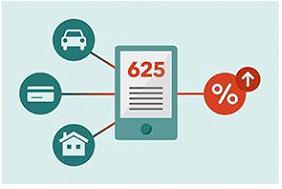
Basically, what you need to know is a score above 680 puts you in a good position to get financing, while below will make it tough and improvement is needed.

Your credit score tells lenders some basic stuff about your credit: How long you’ve had credit, your ability to pay back that credit and how much you owe. And so your credit score is affected by how much debt you’re carrying in regards to limit, how many cards or tradelines you have and your history of repayment. If you’re a young person and new to the world of credit, consider the 2-2-2 rule to help build up your credit. Lenders want to see two forms or revolving credit, like credit cards, with limits no less than $2,000 and a clean history of payment for two years. It’s also good to note, a great credit score will also include keeping a balance on all those cards at any given time below 30 percent of the limit.

Still unclear, call us for free advice!

To ensure your score stays in playoff form, make sure to pay off any collections, like parking tickets, and correct any old or incorrect reporting on your credit score by contacting Equifax to have it removed.

Some people also forget their credit cards have an annual fee and fail to pay them off too. This cannot be stressed enough if you want to keep or attain a good credit score, you have to pay your credit cards or tradelines on time regardless of whether you owe $1 or $1 million.

Debt and credit often go hand-in-hand. There is also such a thing as good debt and of course bad debt. Good debt consists of things like a mortgage, investment property, and college/university tuition. Bad debt includes retail store credit cards, cars, and vacations. There is a tendency when things get really bad to consider declaring bankruptcy or a consumer proposal. A consumer proposal is a formal, legally binding process to pay creditors a percentage of what is owed to them. You really want to avoid these two options. Instead, there are companies out there that will perform the same function and negotiate your debts, but it won’t impact your credit or carry the stigma of bankruptcy or a consumer proposal.

Lastly, if you already own a home and have some equity, but you’re still drowning in credit debt, consider refinancing your mortgage. Sure, you might not get the great rate you have now or you might get dinged for breaking your mortgage early, but using the equity in your home to get rid of high-interest credit payments could keep more money in your pocket at the end of the day. To change your debt-to-income ratio, consider stopping all credit card activity and don't rack up any additional borrowing.

HOMEOWNER TIPS

10 Easy Ways to Winter-Proof Your Home

Close all Curtains during the day and add a liner with cheap thick material for even more insulation. Open them periodically for the greenhouse effect to warm the house.

Close Doors when rooms are not in use. This prevents heat transfer in and out of vacant rooms especially if you have baseboard heaters or radiators. Close the vents if using central forced air. Lower the entire house heat and use a space heater if you are only using 1 room like a TV room or bedroom.

Stop the Draft! The bottom of the doors is not airtight in order to allow them to open and close. Use draft excluders to plug the bottom or even roll up a blanket or towel.

Seal Gaps around frames. Doors and windows commonly have gaps that let cold in and heat out. Seal the gaps with cheap insulation strips or even blankets. Stop the draft and save money!

Floors are Guilty. Is your flooring insulated? Good chance they are not. Massive heat loss occurs through your floors. Area rugs add insulation (or blankets) and look for any gaps in the flooring or floorboard and fill with silicone.

Reflect the Heat. baseboard heaters or radiators located on external walls will simply warm the wall. Line the wall around the heat source with foil to reflect the heat back into the home.

Heat loss is costly!

Cover your pipes! As an insulator to your hot water tank and pipes to hold the heat in and keep the water warmer longer without fuel. Many inexpensive options are available for all tank and pipe sizes. Make use of blankets if you are on a budget.

Use thermostats with timers. Have them turn on earlier so the room heats up in time for use vs. cranking the heat when you need to get warm quickly. Have the heat turn off 30 mins before you are going to bed or leaving the home.

Insulate Walls and Attic. On a snowy day go outside and look at your roof. You should see the snow on the roof. If you can see your roof that means the attic is not insulated well and heat is escaping and melting the snow. Invest in good insulation to save big money in the long run.

The oven is made for Heat! Wintertime is full of yummy cozy meals made in the oven. When the meal is done why not leave the oven door open after you turn the over off. The heat from the oven will warm a room for a good hour after it’s shut off.


December Newsletter 2019

January 2, 2020 By Administrator

Welcome to the December issue of my monthly newsletter!


This month’s edition looks at the debate between Gen-Xers and

Millennials and pride in homeownership.

I would love to hear back from you if you have any questions

or feedback regarding anything outlined below.

Thanks again for your continued support and referrals!

The great debate: Gen-x Vs. Millennial

December Newsletter 2019

If you’ve ever been around a Gen-Xer and Millennial together, you’ve probably heard this debate before: Who had it easier trying to get into the housing market?

Undoubtedly, the millennial will claim there is no struggle greater than the one they currently face, while the Gen-Xer will tell their younger cohort that they are spoiled and don’t understand how hard it was to adult in the 90s.

So, are millennials better or worse off than Gen-Xers at the same age?

A report earlier this year from Stats Canada set out to settle the debate with some interesting findings.

For starters, the study found on average young millennials earned more than young Gen-Xers. Specifically, Gen-Xers between the age of 25 and 34 in 1999 earned on average $51,000 annually compared to millennials who earned $66,500 in 2016.

The study found that millennials in 2016 also had higher assets and net worth then their grunge-era counterparts in 1999 at $154,000 to just $76,700 respectively.

However, millennials were found to be more indebted, with a debt-to-after-tax-ratio at 216 per cent compared to 125 per cent for Gen-Xers.

The study also found millennials are taking on larger mortgages than previous generations. The median mortgage debt on the principal residences of a millennial between the ages of 30 and 34 in 2016 was $218,000 compared to $117,500 for Gen-Xers in 1999.

Interestingly, though their median net worth is higher, there are greater differences in economic well-being among millennials, specifically, millennials in the top 10 per cent held 55 per cent of all total net worth accumulated by their generation.

The study also found that millennials are entering the housing market at similar rates as previous young generations.

So, who can claim the biggest hardship to getting into the market? That would depend on how you want to spin the facts. Instead, maybe the key is in the finding that millennials are getting into the market at the same level as their parents and grandparents did before them.

Of course, there have been a number of market factors and challenges each generation has had to face. Consider late boomers trying to get into the housing market with interest rates at nearly 20 per cent in the early 80s, or the recession and economic malaise of the 1990s.

At the end of the day, and this study proves it, young people in every generation have found a way to look past the challenges in their face, and fulfill the dream of homeownership. And if you’re a young person ready to buy or soon to be, a mortgage broker is your best bet to help get you there.


Pride in ownership can pay off

Any prospective homebuyer knows this situation well. You’re set up for a viewing but when you get there the condition is less than ideal. Maybe the toilets are dirty, or the cluttered kitchen is hiding its full potential. Immediately, you’re turned off and you’ve moved on to another property.

For the owner, that’s sale opportunity lost.

In a lot of cases, buyers can’t really see beyond what’s in front of them. A messy place not only makes your home harder to see, it can cost you money.

Depending on who you talk to in the real estate industry, a messy home compared to a clean house could fetch up to a $20,000 swing.

That’s a lot of money for a weekend of washing walls, decluttering, taking the trash out, running the vacuum and putting some elbow grease.

There are few simple things during this time of year that can help make your home stand out above the rest.

1) While winter can be lovely, it can also get a little messy. Especially around the yard with all those snowy and muddy days. If you want to boost the curb appeal before prospective buyers step foot in your home, you’ll want to make sure you clean your walkways. Don’t be afraid to take advantage of a dry day to keep your garden looking presentable. A little maintenance goes a long way!

2) Winter is all about colour. It’s time to put away all those bright colours for the more earthy tones of the season. If you’re not sure, those are browns,  greys, orange and greens. Change your bed spreads, pillows and rugs to match the season. It doesn’t hurt to throw up a fresh coat of paint or an accent wall in an olive or burnt orange hue.

3) Winter also seems to have a smell. And you can recreate that in your home. The fresh scent of cinnamon or ginger are perfect for the season. You don’t want to go overboard, but nothing feels more welcoming then a home that smells of love and food. You can also decorate your home with the fruit of the season in a decorative bowl. It doesn’t even have to be in the kitchen. It can be right at the front entrance.

Don't like doing much in the winter? Once the cold season has lifted, here are some other ideas.

4) The change of season is a great time to make sure your maintenance is up to date. For the exterior, that means cleaning your gutters, windows and deck. If you have a pool, making sure it’s properly covered and tucked away for the winter. Inside, make sure the furnace and all your electrical components are working including your appliances. Nothing turns off a buyer more than looking at a home in disrepair.

5) The days are short and the weather tends to be a little unpredictable, so you’ll want to ensure your home is bright. If you’ve got some burned out lights both inside and out, replace them. And before a buyer comes in for showing, turn on all your lights. Keep your blinds and curtains open to let in as much light.

If you’re about to put your prized possession on the market, treat it like one and take pride in ownership.


top mortgage brokers in Ontario and in Canada

HOMEOWNER TIPS

If your holiday is just not complete without a live tree, the American Christmas Tree Association has a few tips to keep the danger at bay.

  • Fresh trees are less likely to catch fire, so look for a tree with vibrant green needles that are hard to pluck and don’t break easily from its branches. The tree shouldn’t be shedding its needles readily.
  • Always place your tree away from heat sources like fireplaces, radiators, candles, heat vents or lights, and keep the tree base filled with water to avoid a dry out.
  • Make sure all your indoor and outdoor Christmas lights have been tested in a lab by the UL or ETL/ITSNA for safety, and throw out any damaged lights.
  • Any lights you use outdoors must be labeled suitable for exterior placement, and be sure to plug them into a ground-fault circuit interrupter protected receptacle.
  • Keep all your holiday candles away from your Christmas tree, surrounding furniture and décor.
  • Bedtime means lights off! ­ Don’t forget to turn your Christmas tree lights off each night.

DID YOU KNOW...

If you have a Canada Student Loan, one of the following measures may be right for you:

  • Through the Repayment Assistance Plan (RAP) you may qualify for a reduced monthly payment or no monthly payment.
  • Through the Repayment Assistance Plan for Borrowers with a Permanent Disability (RAP-PD) you may qualify for a reduced monthly payment (or no monthly payment at all) and receive financial help with expenses related to your disability.
  • You may be eligible to have your loans forgiven through the Severe Permanent Disability Benefit if you have a severe permanent disability.
  • Under the Revision of Terms measure, you can ask to have your student loan payments decreased if you are having difficulty repaying your student loan debt or increased if you wish to pay off your loan debt more quickly.
  • If your Canada Student Loan is in collection, Canada Student Loan Rehabilitation may be able to help you.
  • You may be eligible for Canada Student Loan Forgiveness for Family Doctors and Nurses if you are working as a family doctor, resident in family medicine, nurse or nurse practitioner in an under-served rural or remote community.
« Previous Page
Next Page »
  • Services
  • Rates
  • Home Purchasing
  • Refinance
  • U.S. Mortgages
  • Calculator
  • Apply
  • Blog
  • About
  • Contact
Cameron Mackie -Mortgage Broker Licence #M08008827
Independently owned and operated ©Copyright 2025
TMG The Mortgage Group Licence #10315
Sitemap