

1.877.754.2004 Request A Quote
Google Play Ap Store
Apple AP Store

RMC Canada

Mortgage Broker Ontario

  • Services
  • Rates
  • Home Purchasing
  • Refinance
  • U.S. Mortgages
  • Calculator
  • Apply
  • Blog
  • About
  • Contact
You are here: Home / Archives for Blog

November Newsletter 2019

November 7, 2019 By Administrator

Welcome to the November issue of my monthly newsletter!


This month’s edition looks at whether you should go fixed or variable and tax write-offs on your rental property.

I would love to hear back from you if you have any questions or feedback regarding anything outlined below.

Thanks again for your continued support and referrals!


Should you go fixed or go variable?

top mortgage brokers in Ontario and in Canada

It’s the first and only thing anyone usually asks when you talk about your mortgage: What’s your rate? While everyone can recall their rate off the top of their head, it’s the only detail of the mortgage they remember or care to know. Though the rate is obviously important, your mortgage is so much more than a rate, and if you’re not paying close attention, it can cost you money.

Before we dive deeper, let’s talk fixed rate vs. a variable rate and which one is better. Well, that all depends. First-time homebuyers and older homebuyers typically love the stability of a fixed rate. Keep in mind, seven-in-ten fixed mortgages are broken before the term ends. A fixed rate for five years is fine as long as you stick with a lender that’s going to calculate the penalty if you break your mortgage on the contract rate versus the Benchmark rate. That’s because the Benchmark rate, or as it’s sometimes called the Bank of Canada rate, is higher than your contract rate. Typically a credit union or monoline is the right choice for this mortgage.

Variable rates are great with any lender as it just comes down to who offers the best discounted variable rate. There’s a pretty simple way to decide whether a variable or fixed makes sense, based on rate alone.

It’s called the 50-basis point rule

Basically, take the best fixed rate out there and the best variable rate out there and subtract the two. If the number is less than 50 basis points, there is strong argument to go for a fixed rate. However, if the difference is more than 50 basis points, there’s a solid case to go with a variable.

Pretty simple right? What’s not as simple is the personality of your mortgage. It may not seem like it, but yes, your mortgage has a personality. Think of it like a shiny sports car. It may look amazing when it rolls off the lot, but as the years go on, does it meet your daily needs? Besides your mortgage rate, you need to consider portability, and whether it can be blended and extended and how penalties for breaking the mortgage are calculated. When people start looking for a mortgage, they’re usually getting advice from friends or their parents, and the only question they’re asking is, what’s the rate? But if they don’t know the details of the mortgage like the ones listed above, you can tell them to stick their head in the sand, because they’re giving you bad advice. And if a mortgage broker is only fixated on the rate, you’re working with the wrong one.

Life happens and our circumstances change. You really want to make sure the mortgage will work for you in the future before you sign on the dotted line.


Using the interest on a second mortgage as a tax write-off

top mortgage brokers in Ontario and in Canada

We all know owning a second rental property is a great way to invest and build your wealth portfolio. Unfortunately, a lot of homeowners sitting on plenty of equity are afraid to use that money for a downpayment to purchase a rental or investment property. The idea of a second or third mortgage tends to spook people away. While there are always financial risks in any investment, there’s a little-known incentive that might make you take the leap from homeowner to real estate mogul.

You can expense the interest on a mortgage as long as the INTENT for the funds are used on an investment property.

Thus, when you’re refinancing or taking equity, you can pull money from your existing owner-occupied home and use the funds on a rental property. Now the interest on the money you pulled out (and only that money, not any existing money) can be written off or expensed against your rental income.

You could expense your rental income down to a negative which in turn lowers your overall taxable income.

Putting even more money back into your pocket

It might only lead to a savings of a few hundred dollars a month, but not many people know it’s an option and is an extra incentive to consider.

You’ll definitely want to talk to your accountant and your mortgage broker to get more details.

There are also a few things to consider if you’re going down this route for an investment property.

You must claim your rental income on your tax return. It’s tax evasion if you don’t.
Mortgage rates are also typically cheaper for owner-occupied homes compared to rental or investment homes. Don’t be tempted to tell your broker or lender the house use will be owner occupied when it will actually be a rental because you want the lower rate. That is mortgage fraud. You could get charged and or the lender could call the balance.

While taking on a second or third mortgage might seem a little daunting at, there are some options available to save you money and your mortgage broker can help.

 

HOMEOWNER TIPS

Let the heat reach you:

Dust or vacuum radiators, baseboard heaters and furnace duct openings often and keep them free from obstructions such as furniture, carpets and drapes.
Replace/Clean Furnace Filters:
Check and clean or replace furnace air filters each month during the heating season. Ventilation system filters, such as those for heat recovery ventilators, should be checked every two months.


DID YOU KNOW…


When you’re buying your first house, negotiating for the mortgage can seem like the least fun and most complicated part of the process. But having no experience making one of life’s biggest purchases doesn’t mean you’re destined to pay the bank’s listed rate. I will work on your behalf with multiple lenders to ensure you receive the best mortgage product and rate catered to your unique needs – whether it’s your first or fifth mortgage.

ITS NOT ALL ABOUT RATE, HERE’S WHY!

November 6, 2019 By Administrator

Ob-sess(ed): the act of being preoccupied or fill the mind continually, intrusively and to a troubling extend.

As mortgage consumers, we get obsessed with obtaining the best rate – we are caught in the cross-hairs of lender marketing. Lenders spend millions of dollars annually to pitch their message; some listen and some don’t. As consumers, we all want make sure we are getting the best value for our money. When entering into the world of purchase and owning real estate, there should be a detailed plan laid out for one to follow. We should make sure all our plans fit the mortgage products we inherently rely on. Would you put a square peg in a round hole?

Along with making sure the mortgage product is suitable, there is also an element of competition between friends, family members and even colleagues at work. Consumers thought process goes something like this (…and I was once part of this faculty)…”I need to get the lowest rate so that I supersede the rate that (enter name here) got…” That statement couldn’t be further from the truth – it’s 100% wrong.

We all want to pay as little as possible up front, but never put any thought into life’s uncertainties.

What if you need to break the mortgage?, to consolidate some debt, require equity for a renovation, moving to another town/city where your current lender does not lend, leverage equity to take advantage of some financial planning strategies…the list goes on.

60% or 6 out of every 10 mortgages that originally opt for a 5 year fixed term are changed/broken/altered 38 months into the contract. The act of breaking one’s mortgage will yield a penalty on the outstanding balance for 22 months. The penalty will be either an Interest Rate Differential calculation or 3 month interest, whatever is greater. There is so much more to choosing a mortgage rate and term than just the 5 bold character,s ?.??% being advertised.

BORROWER’S HAVE TO LOOK PAST THE NUMBERS AND EDUCATE THEMSELVES ON THE TERMS OF THAT RATE BEING OFFERED; THE FINE PRINT!

Depending on the RATE and its terms, that penalty can be dramatically different. Lenders all have a suite of various products to fit you, the consumer’s, wants and needs. It’s up to you and your Mortgage Expert to navigate through the gauntlet of rate sheets and product information to find what works for you and your specific scenario. As Mortgage Experts, we here at Dominion Lending Centres have access to a wide range of lenders; major chartered banks, credit unions and investment lenders. At times there could be a difference of 10 to 20 basis points (0.10-0.20%) from lender to lender.

Let’s take for example a rate of 2.44% vs 2.64% for a 5 year fixed term. It’s obvious which one most borrowers would gravitate to, but is it worth it? What are the pitfalls? These two rates have drastically different penalty structures even though they are offered by the same lender. The 2.44% rate holds a 3% penalty on the outstanding mortgage balance (OSB). The 2.64% rate calculates the Interest Rate Differential (IRD) or 3 months interest, whatever is greater to determine the penalty.

Here is an example of what it would cost to exit these mortgage contracts early.

We will use the 60% rule along with a starting balance of $330,000, 25 year amortization and $0 prepayments made to the principal for the first 38 months.

Rate 2.44% 2.64%

OSB @ 38 mos $298,401.05 $299,153.80

Penalty 8,952.03 $2,468.02

Difference $6,484.01

Monthly payment $1,468.45 $1,501.39

Difference over 38 mos $1,251.72

Same term but a different mortgage product yields a difference in penalty of $6,484.01. Over that same 38 month term, the higher interest will have an ‘out-of-pocket’ difference of $1,251.72. Now ask yourself, with all of life’s uncertainties, which would you prefer, the 2.44% or 2.64% rate? I would choose the higher rate and pay $5,232.29 less.

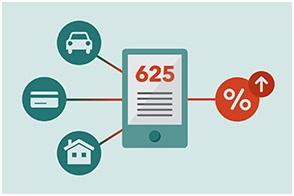

Currently over 65% of Canadians will cancel their mortgage term early!

This is where having a knowledgeable Mortgage Expert from Dominion Lending Centres working for you pays off in spades. We will review your plan and recommend the best mortgage product. Make sure you examine all aspects of the mortgage, 60% of 5 year fixed mortgages are altered. Here’s yet another reason to always consider variable rate mortgages, much more flexible and only yield 3 month interest penalty on the OSB no matter where you are in the contract timeline.

October Newsletter 2019

October 15, 2019 By Administrator

Welcome to the October issue of my monthly newsletter!


This month’s edition looks at same-lender renewal rates and improving your credit score. Please let me know if you have any questions or feedback regarding anything outlined below.

Thanks again for your continued support and referrals!

Mortgage Renewals with the same lender are on the rise, but should you just sign on the dotted line? Your mortgage broker has answers

top mortgage brokers in Ontario and in Canada

If you’re in a mortgage that’s coming up for renewal in the coming months and you’re considering just staying with your current lender, you wouldn’t be alone.

According to the Canadian Mortgage and Housing Corporation’s (CMHC) Residential Mortgage Industry Report released in the summer, in 2018, the number of mortgage renewals with the same lender increased by 16 per cent over the previous year.

The report suggested one of the factors that may have contributed to large increases in loan renewals with the same institution are the tighter approval criteria. In other words, people are worried they may not qualify for a new mortgage if they switch lenders, so they’re staying put.

You’ll remember in the fall of 2017, OSFI, (the Office of Superintendent of Financial Institutions) the agency that regulates the financial industry, announced tighter rules on mortgages. The biggest change related to uninsured mortgages, or homebuyers with 20 per cent or more for a down payment. These people are now required to go through a “stress test” or qualify using a minimum qualifying rate.

The changes came a year after a similar stress test was introduced for insured mortgages.

If the tighter mortgage rules still have you stressed as you face a mortgage renewal, the CMHC report noted the approval rate for same lender renewals remained stable at 99 per cent. Renewals are not specifically subject to the new stress test and are more likely to meet current lender criteria, the reported noted.

So, does that mean you should just automatically renew your mortgage with the same lender when your term is up? Not necessarily. You need to reach out to a mortgage professional to get the best advice.

For starters, most lenders, especially the big banks, will send you a renewal letter when there’s about three months left on the term. Sometimes that letter could come with six months left. Typically, the lender will offer you a rate at that time and all you’ll have to do is sign at the bottom line to roll over your mortgage.

But beware, lenders often offer a higher rate than a new client because they’re hoping the ease of renewal will keep you from seeking out a new lender and lower rate.

In some cases, it may be best to just sign and roll over your mortgage. There are a few things to consider. If you decide to change lenders, you’ll basically have to go through an approval process again. That entails getting all your documents, lawyer’s fees and appraisals.

You’ll have to ask yourself, is it worth the effort to save a few basis points off your rate, or a few hundred dollars over a term to make the switch?

For some it won’t be. But, if a switch can lead to saving thousands of dollars, it would certainly be something to consider. While everyone’s situation is different, the larger the mortgage, the bigger the savings will be if you can find a lower rate.

Often, homeowners will just use a bank their parents recommend for their first mortgage. But they might find themselves not happy with the service or terms of the mortgage and may just want to switch to a different lender as the mortgage comes up for renewal.

If that’s a situation you find yourself in, you have options, and a mortgage broker can help you make the best decision.


Improving your credit score isn’t as hard as you think

If you’re credit challenged but want to get into the housing market, it can be a tough road to hoe. But improving your credit to a point where a lender will give you a chance, is very doable.

First, I won’t bore you with the detailed minutiae of credit scores. Basically, what you need to know is a score above 680 puts you in a good position to get financing, while below will make it tough and improvement is needed.

Your credit score tells lenders some basic stuff about your credit: How long you’ve had credit, your ability to pay back that credit and how much you owe. And so your credit score is affected by how much debt you’re carrying in regards to limit, how many cards or tradelines you have and your history of repayment.

If you’re a young person and new to the world of credit, consider the 2-2-2 rule to help build up your credit. Lenders want to see two forms or revolving credit, like credit cards, with limits no less than $2,000 and a clean history of payment for two years. It’s also good to note, a great credit score will also include keeping a balance on all those cards at any given time below 30 per cent of the limit.

To ensure your score stays in playoff form, make sure to pay off any collections, like parking tickets, and correct any old or incorrect reporting on your  credit score by contacting Equifax to have it removed. Some people also forget their credit cards have an annual fee and fail to pay them off too.

This cannot be stressed enough, if you want to keep or attain a good credit score, you have to pay your credit cards or tradelines on time regardless of whether you owe $1 or $1 million.

There is a tendency when things get really bad to consider declaring bankruptcy or a consumer proposal. A consumer proposal is a formal, legally binding process to pay creditors a percentage of what is owed to them.

You really want to avoid these two options. Instead, there are companies out there that will perform the same function and negotiate your debts, but it won’t impact your credit or carry the stigma of bankruptcy or a consumer proposal.

Lastly, if you already own a home and have some equity, but you’re still drowning in credit debt, consider refinancing your mortgage. Sure, you might not get the great rate you have now or you might get dinged for breaking your mortgage early, but using the equity in your home to get rid of high interest credit payments could keep more money in your pocket at the end of the day.


HOMEOWNER TIPS

Seal Out the Cold:

In winter, reduce the heat lost from your home or workplace by getting rid of drafts around windows, doors, baseboards and outside wall openings. Windows can account for a large part of heat loss in a building. Upgrade them if they are too old. Window insulators can help keep your home warm in winter and cool in summer. Insulate power outlets and other sockets using foam pads – this is really important if the walls are not properly insulated.


DID YOU KNOW...


When you’re buying your first house, negotiating for the mortgage can seem like the least fun and most complicated part of the process. But having no experience making one of life’s biggest purchases doesn’t mean you’re destined to pay the bank’s listed rate. I will work on your behalf with multiple lenders to ensure you receive the best mortgage product and rate catered to your unique needs – whether it’s your first or fifth mortgage.

September Newsletter 2019

September 10, 2019 By Administrator

Welcome to the September issue of my monthly newsletter!


This month’s edition looks at 6 things any co-signor should consider and how mortgage brokers can help you at any stage in your life.

I would love to hear back from you if you have any questions or feedback regarding anything outlined below.

Thanks again for your continued support and referrals!

6 Things all Co-signors should consider

Co-signing on a loan may seem like an easy way to help a loved one (child, family member, friend, etc.) live out their dream of owning a home. In today’s market conditions, a co-signor can offer a solution to overcome the high market prices and stress testing measure. For example, if you have a damaged credit score, not enough income, or another reason that a lender will not approve the mortgage loan. An additional co-signor on the loan can satisfy the lenders needs and lessen the risk associated with the loan. However, as a co-signor there are considerations.


  1. If you act as a co-signor or guarantor, you are entrusting your entire credit history to the borrowers. What this mean is that late payments on the loan will not only hurt them, but it will also impact you.


  1. Understand your current situations—taxes, legal, and estate. Co-signing is a large obligation that could harm you financially if the primary borrowers cannot pay.


  1. Try to understand, upfront, how many years the co-borrower agreement will be in place. Also, if you can make changes to things mid-term if the borrower becomes able to assume the original mortgage on their own.


  1. Consider the implications this will have regarding your personal income taxes. You may have an obligation to pay capital gains taxes and we would highly recommend talking to an accountant prior to signing off.


  1. Co-signors should seek independent legal advice to ensure they fully understand their rights, obligations and the implications. A lawyer can lay it out clearly for you as well as help to point out any things you should take note of.


  1. Carefully think about the character and stability of the people that you are being asked to co-sign for. Do you trust them? Are you aware of their financial situation to some degree? Are you willing to put yourself at risk potentially to take on this responsibility? Another consideration is to think about your finances down the road and determine how much flexibility will be needed for yourself and your family too! If you have plans of your own that will require a loan, refinancing your home, etc. being a co-signor can have an impact.


Co-signing for a loan is a large responsibility but when it is set-up correctly and all options are considered, it can be an excellent way to help a family member, child, or friend reach their dream of homeownership. If you are considering being a co-signor or wondering if you will require a co-signor on your mortgage, reach out to a mortgage professional. They are always happy to answer any questions and guide you through processes like this.


Mortgage brokers can help you get financing for every stage of your life

Buying a home can feel like a journey. Whether it’s your first place or 10th, there are so many steps to go through and things you need to know. While you could try to secure financing on your own, at some point you’re going to need the help of a professional. And that’s where a Dominion Lending Centres mortgage broker can help. They are your tightest companion on the road to home ownership.

The trend towards using mortgage brokers/agents to arrange mortgage financing is continually increasing. Why has this shift occurred? Well, very simply put, TOP-NOTCH SERVICE and UNBIASED ADVICE!

The banks are cutting back on staff and are centralizing operations to save money. This doesn’t bode well for the consumer. Unlike individual banking representatives, who often move from one branch to another hoping to advance in the corporations, your mortgage advisors work to form lifelong relationships with their clients.

Today, many banks are buying out smaller trust companies to expand their portfolios. Most major banks lend out money through these trust arms at reduced rates. If you just stick with your bank, you lose access to hundreds of other financing arms – including offerings from multiple banks, credit unions and trust companies that may have better rates, products and terms to offer you.

Mortgage brokers get paid by the lenders so their service is offered to you without charge. What else can you ask for? Better rates, personalized service, flexibility and products at no cost to you. Some will say that the fee is built into the payment, but this is not so.

It costs the banks approximately 40 per cent less to generate a mortgage through a broker than a branch. Generally because there is no overhead to pay if the bank doesn’t get a client’s business. Instead, the mortgage broker bears the entire cost of day-to-day business activity.


HOMEOWNER TIPS

Reduce Heating Costs:

Your furnace or boiler is a large energy user. Consider:

  • If health permits, keeping your thermostat at 20°C or below
  • Lowering your thermostat at night and when no one’s home
  • Checking the furnace filter once a month during the heating season (change or clean when dirty)
  • Having a professional tune-up of your heating system at least every other year
  • Replacing your older furnace with a higher efficiency mode

DID YOU KNOW...


When you’re buying your first house, negotiating for the mortgage can seem like the least fun and most complicated part of the process. But having no experience making one of life’s biggest purchases doesn’t mean you’re destined to pay the bank’s listed rate. I will work on your behalf with multiple lenders to ensure you receive the best mortgage product and rate catered to your unique needs.

« Previous Page
Next Page »
  • Services
  • Rates
  • Home Purchasing
  • Refinance
  • U.S. Mortgages
  • Calculator
  • Apply
  • Blog
  • About
  • Contact
Cameron Mackie -Mortgage Broker Licence #M08008827
Independently owned and operated ©Copyright 2025
TMG The Mortgage Group Licence #10315
Sitemap